A closer look at the materials we choose, and how to care for them.
Cotton is a natural fibre valued for its softness, breathability, absorbency and durability. Its versatility makes it suitable for a wide range of garments and fabrications.
Cotton can be grown conventionally, organically or produced from recycled sources. Organic cotton is cultivated without genetically modified seeds and with restrictions on synthetic fertilisers and pesticides. Recycled cotton is made from pre-existing cotton textiles or production waste, giving discarded fibres another use.
Different cotton fabrics can vary considerably in weight, texture and finish, so their care requirements may differ.
How to care for cotton?
Always follow the care label specific to your garment. Wash at the recommended temperature and avoid unnecessary heat. Air drying is preferable where possible. Use the recommended ironing or steaming temperature for the fabric.
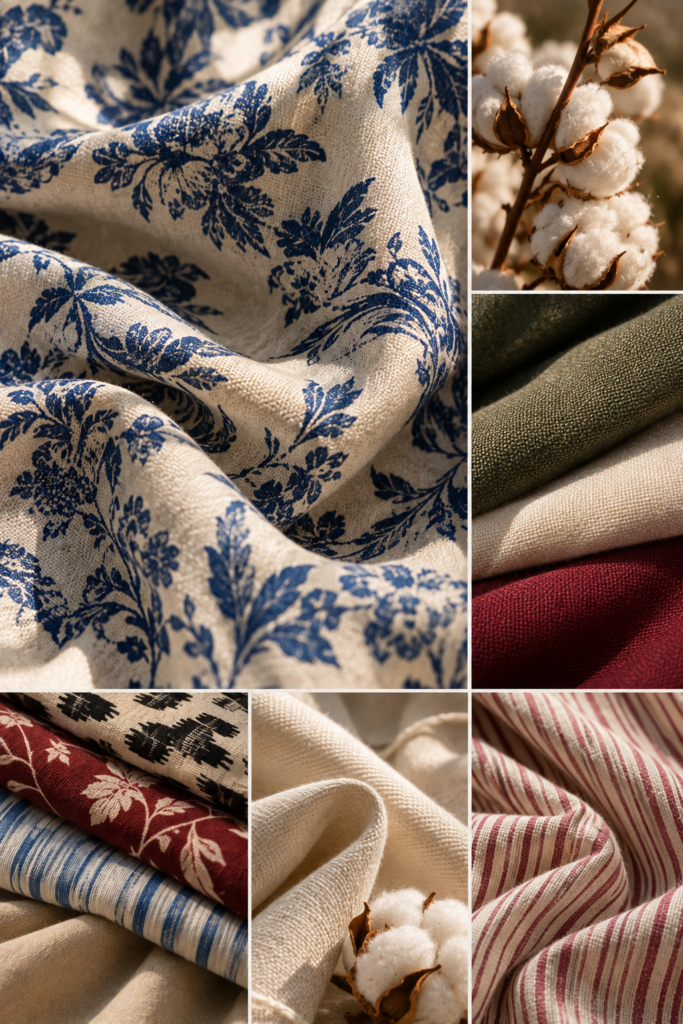
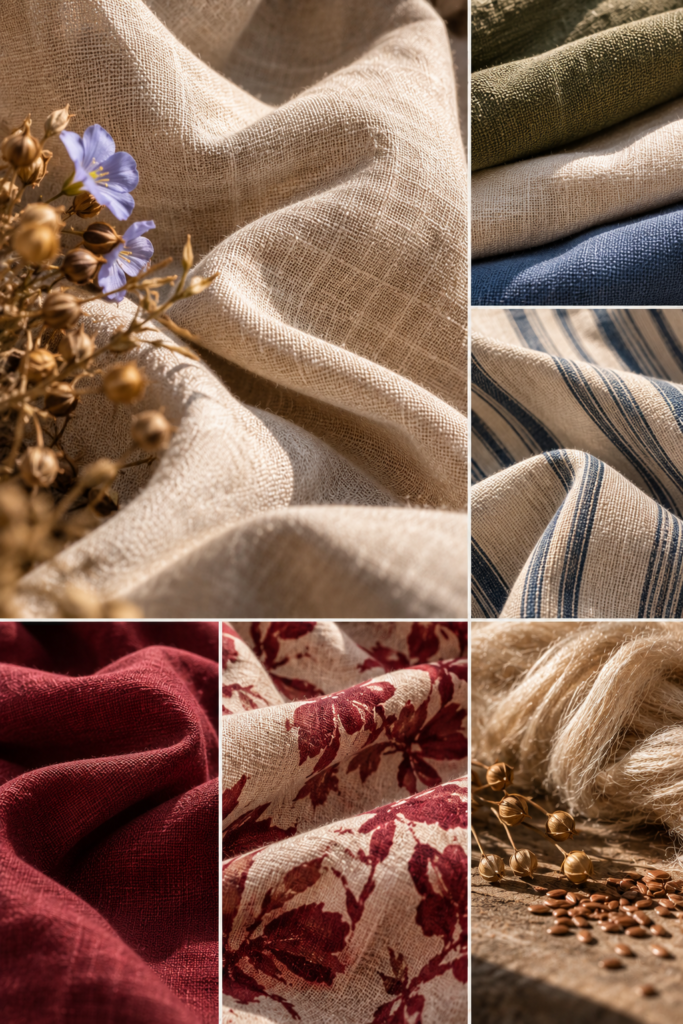
Linen is a natural fibre derived from the flax plant. It is breathable, lightweight and absorbent, with a distinctive natural texture. Linen is known for its cool, comfortable feel and tends to become softer with use. It can also be blended with other fibres to create different textures and characteristics.
How to care for Linen?
Linen should be washed only when necessary. Follow the care label and use a gentle cycle with a mild detergent. Avoid bleach and optical brightening agents. Wash dark colours at a lower temperature to help prevent fading and use a low spin. Air dry whenever possible. Steam or iron while the fabric is slightly damp using a medium temperature. Store linen in a cool, dry place
Viscose
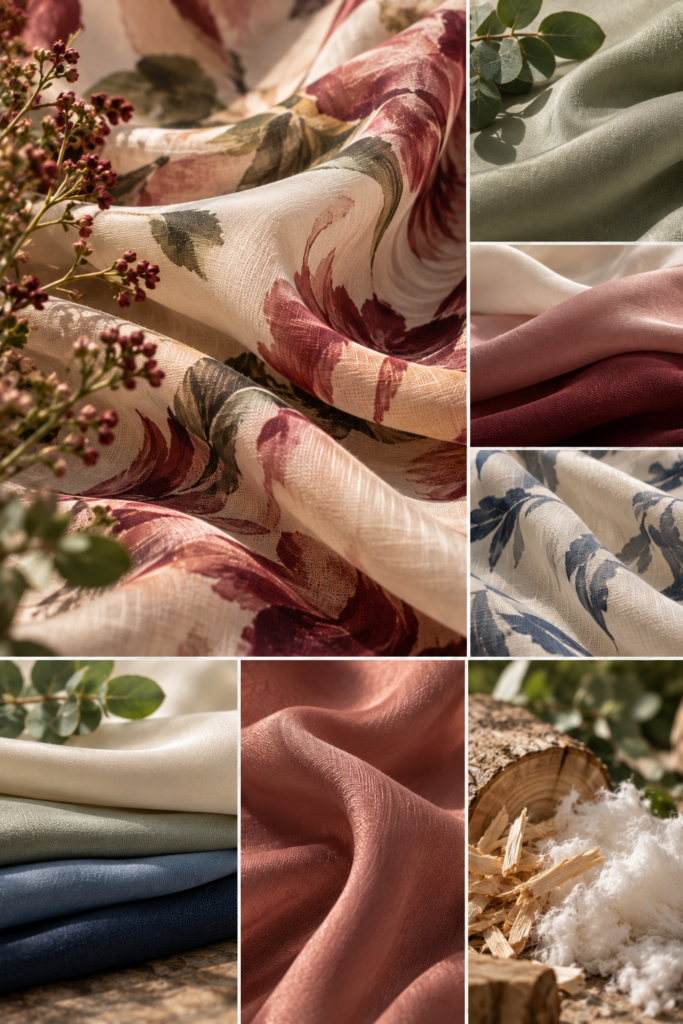
Viscose is a regenerated cellulosic fibre made from cellulose derived from wood. It is soft, comfortable, absorbent and durable, with a fluid drape and smooth feel.
Modal
Modal is a regenerated cellulosic fibre derived from wood. It is known for its softness, smooth feel and ability to retain its softness through repeated washing and drying.
Lyocell
Lyocell is a regenerated cellulosic fibre derived from wood. It is soft and gentle against the skin, with good strength and moisture management.
How to care for regenerated cellulosic fibres?
Hand washing in cool water is the gentlest option. If machine washing is permitted, turn the garment inside out and use a washing bag, cold water, a delicate cycle and low spin. Air dry whenever possible and avoid wringing. For garments made with other materials, always follow the care label. If the garment only needs refreshing, steaming can be preferable to washing.
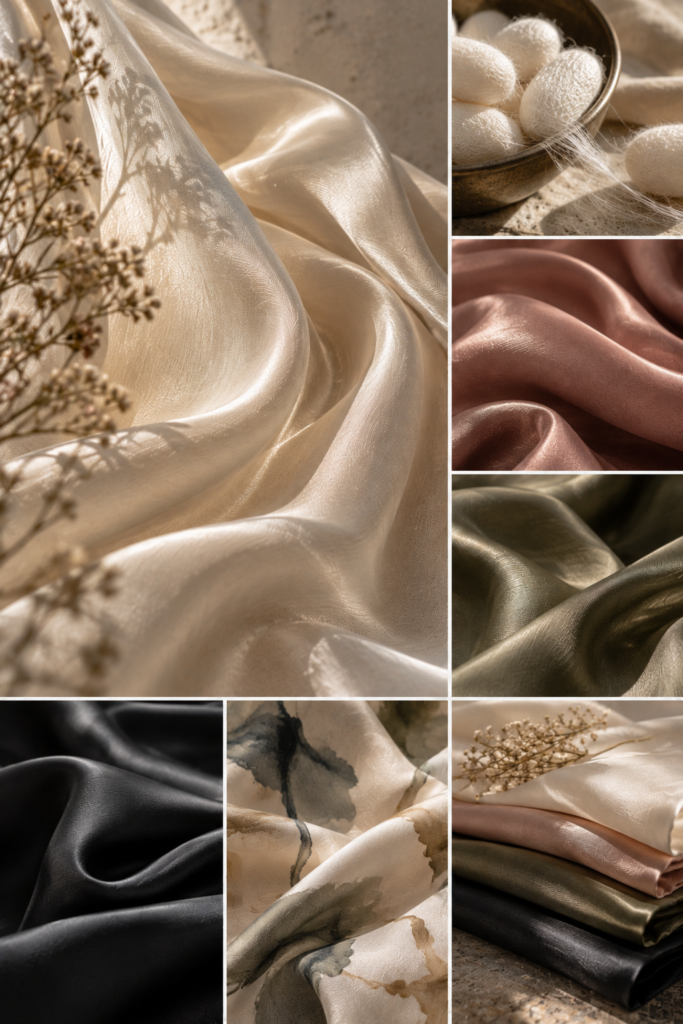
Silk is a natural protein fibre produced by silkworms. It is known for its soft, smooth feel, natural lustre, strength, and comfortable feel against the skin. Silk is also naturally absorbent and lightweight, making it well suited to fluid and delicate garments.
If the garment only needs a refresh, steaming is preferable to washing.
How to care for silk?
Hand washing in cool water with a gentle detergent is the safest option. If machine washing is permitted, use a gentle cycle with cool water. Do not twist, wring or squeeze silk. To remove excess water, gently press the garment between clean towels. Air dry away from direct sunlight, as prolonged exposure can cause fading. Steaming is preferable to ironing.
Wool is a natural fibre obtained from the fleece of sheep and other animals. There are many types of wool, each with its own softness, warmth and texture. Wool is naturally breathable, temperature regulating and resilient, and it can absorb moisture while helping to keep the body comfortable.
Lambswool
Lambswool comes from the first shearing of a young sheep. It is naturally soft, warm and breathable, with a smooth feel and good resilience.
Merino Wool
Merino wool is known for its fine, soft fibres and comfortable feel against the skin. It is breathable, temperature regulating and naturally moisture absorbent.
Cashmere
Cashmere is a fine fibre obtained from cashmere goats. It is exceptionally soft and lightweight while providing warmth and comfort.
Alpaca
Alpaca fibre is naturally warm, soft and lightweight. It is known for its smooth feel and natural resistance to moisture.
Mohair
Mohair is made from the hair of the Angora goat. It is known for its distinctive lustre, softness and resilience, with a characteristic fluffy texture.
Recycled Wool
Recycled wool is made from wool fibres that have already been used. These fibres can be recovered from pre-existing wool garments or textile production and processed for use again.
How to care for wool?
Wool generally does not need frequent washing. Airing the garment or spot cleaning when needed can help extend the time between washes. When washing is necessary, always follow the care label. Hand washing is generally the gentlest option. If machine washing is permitted, use a wool cycle with cool water and a mild wool detergent. Avoid bleach and fabric softener. Never wring or twist wool garments. Dry them flat and store folded rather than hanging.
Pilling can naturally occur where wool encounters friction. Remove pills gently using a suitable wool or cashmere comb.
Leather is a durable and flexible material made by tanning animal hides. It is long lasting, resistant to dirt and stains, and can develop more character with use.
How to care for leather?
Clean gently with a soft, slightly damp cloth when needed. Avoid soaking leather or washing it in a machine or by hand. Keep it away from prolonged direct sunlight to help preserve its colour. Use a suitable leather conditioning cream occasionally to maintain softness and help prevent drying, cracking and splitting.